Advanced level Dates to be confirmed

Schema therapy: a certification course to ISST standards

A structured schema therapy course built to the standards of the International Society of Schema Therapy: theory, interactive demonstrations and practice across 60 academic hours.

Duration
4.5 months
Workload
60 academic hours
Schedule
15 sessions, once a week, 3 hours 20 minutes each
Format
Hybrid: in person in Warsaw or online
Language
Russian
Start
Dates to be confirmed — we will let you know in response to your request
Certificate
Certificate of CBT Poland Center
Price
On request

What this course is about

Schema therapy is a development of cognitive behavioural therapy for the cases where brief work does not give a lasting result. It addresses repeating scenarios: the same difficulties in relationships, a chronic sense that “something is wrong with me”, self-sabotage, emotional instability, personality disorders.

The approach combines cognitive and behavioural techniques with experiential work — through imagery, dialogues and the therapeutic relationship. That makes it one of the most structured and at the same time one of the most emotionally intense directions within CBT.

How the course is built

Fifteen sessions of 3 hours 20 minutes, once a week. Each session consists of theory, a demonstration of the technique by the teacher on real material, and practice by participants with feedback. Between sessions there are short assignments and practising the technique in your own work.

Who needs the course

Practitioners already working in CBT who have hit a ceiling: the client understands their thoughts and does the assignments, but the underlying pattern does not change. Schema therapy provides the language and the tools for precisely that layer of work.

The document you receive

A certificate of CBT Poland Center confirming completion of the course of 60 academic hours — provided you attend the sessions and pass the assessment. The route to international ISST certification requires additional supervision; the coordinator will explain it in more detail.
Outcome

What you will be able to do after the programme

See the schemas behind behaviour

Recognise early maladaptive schemas and understand how they hold in place a problem that outwardly looks like "personality".

Build a conceptualisation in the schema model

Assemble a map of schemas, modes and maintaining cycles — and explain it to the client so that it becomes a working tool.

Work in the mode model

Identify the vulnerable child, the critical parent, coping modes and the healthy adult mode; switch modes within a session.

Apply experiential techniques

Imagery work and rescripting, role dialogues, chair work — techniques that produce an emotional shift where talking is powerless.

Establish limited reparenting

Use the therapeutic relationship as an instrument of change while holding professional boundaries.

Work with personality disorders

Apply schema therapy to borderline, narcissistic and avoidant disorders and to chronic conditions resistant to brief therapy.

Contents

Module breakdown

15 sessions grouped into thematic blocks. Each block includes theory, a demonstration of the technique by the teacher and practice by participants.

01 The theoretical model of schema therapy

Where schema therapy grew from and what it added to classical CBT. A child's core emotional needs and the consequences of their not being met. The eighteen early maladaptive schemas and the five schema domains.

02 Applied technology of the approach

Assessing schemas: interview, questionnaires, working with the life history. How to tell a schema from a situational reaction. We assemble the client's initial schema map.

03 Schema modes and the parts model

Modes as a way of describing internal dynamics: the vulnerable and the angry child, the demanding and the critical parent, coping modes, the healthy adult. How to recognise mode switches in real time.

04 Case conceptualisation and maintaining cycles

From individual schemas to a coherent conceptualisation. The cycles that maintain the problem: avoidance, overcompensation, surrender. How to explain the client's own mechanism to them without blame.

05 The therapeutic relationship and limited reparenting

Limited reparenting as the principal instrument of the approach: what it means in practice, where the boundaries are, how it differs from support and from taking charge. Empathic confrontation.

06 Cognitive interventions

Working with the content of schemas: testing schema beliefs against the material of the client's life, schema diaries, flashcards, building the healthy adult's argument.

07 Behavioural interventions

Breaking the behavioural patterns that reinforce a schema. Homework experiments, working with coping strategies, planning new ways of responding.

08 Experiential techniques: imagery work

Diagnostic imagery work and rescripting: how to enter an early memory safely, what to do inside the image and how to come out. Typical mistakes and how to avoid them.

09 Experiential techniques: dialogues and role work

Chair work, dialogues between modes, working with the inner critic in real time. How to hold the structure when a session is full of emotion.

10 Schema therapy for personality disorders and specific diagnoses

The specifics of working with borderline, narcissistic and avoidant personality disorders. Schema therapy in chronic depression, anxiety disorders and addictive behaviour.

11 Assessment and review of your own case

Presenting the conceptualisation of your own client, feedback from the teacher and the group, a discussion of where to go next — supervision and the route to international certification.

Who teaches

Programme teachers

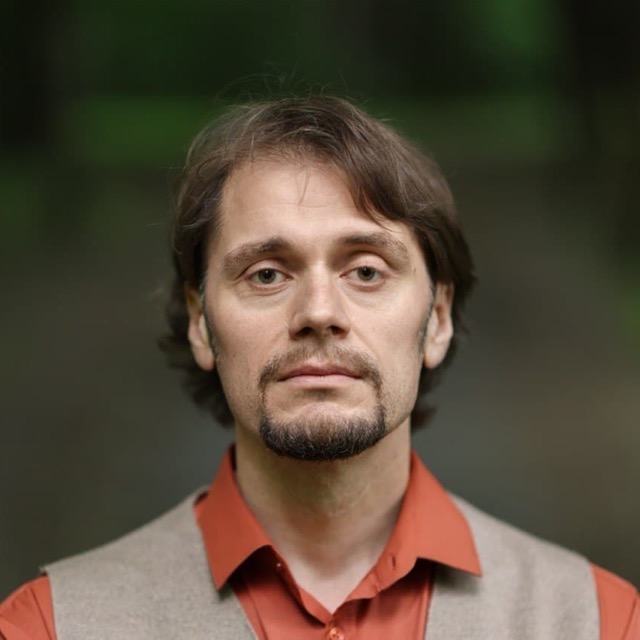
Dmitry Dyakov

Dmitry Dyakov

Co-founder of the centre · Teacher and supervisor

Doctor of Psychology, professor. Official national representative to the European Association for Behavioural and Cognitive Therapies (EABCT). Accredited CBT therapist and supervisor, schema therapist. Leads the centre's certification programmes and trains practitioners in Poland, Belarus and Israel.

CBTSchema therapyEMDRSupervision
Questions

Frequently asked questions about the programme

? Is the course suitable if I have not completed a CBT programme?

Schema therapy grew out of CBT and relies on its core tools. Without CBT training the course will be hard going: a substantial part of the techniques assumes you can already formulate a case and work with beliefs. Write to us about your experience — we will tell you straight whether to come now or do CBT+ first.

? What does "to ISST standards" mean?

The programme is built to the International Society of Schema Therapy's requirements for the content and volume of foundational schema therapy training. The route to international certification is discussed with participants individually: it requires additional supervision and session recordings.

? Can I take part online?

Yes, the course runs in a hybrid format. Online participants work in separate groups when practising experiential techniques.

? How many sessions can I miss?

No more than two. Schema therapy builds sequentially: missing the block on modes or on imagery work breaks the logic of the course.

? Is there a limit on the number of participants?

Yes, 20 people maximum. The course involves a great deal of practice in which the teacher observes participants working — impossible in a large group.

Request about this programme

Leave your contact details — a coordinator will tell you about enrolment dates, the schedule and pricing, and answer questions about the format.

Send a request

We are opening soon

Applications are not open yet. Write to us by email and we will reply as soon as booking opens.

info@cbtpoland.com